M&S ENGINEERING
Safety and Compliance Database

Company Safety Documents

 
Name:
Description:
 

M&S Engineering Safety Plan


Power services written safety plan

Other Safety Documents

 
Name:
Description:
 

Testing for the program


Testing the program again.


Be prepared for your trip

Safety Tips:

Texas Weather App


Be prepared for your trip-check the roads.


Best practices and safety tips for working from home


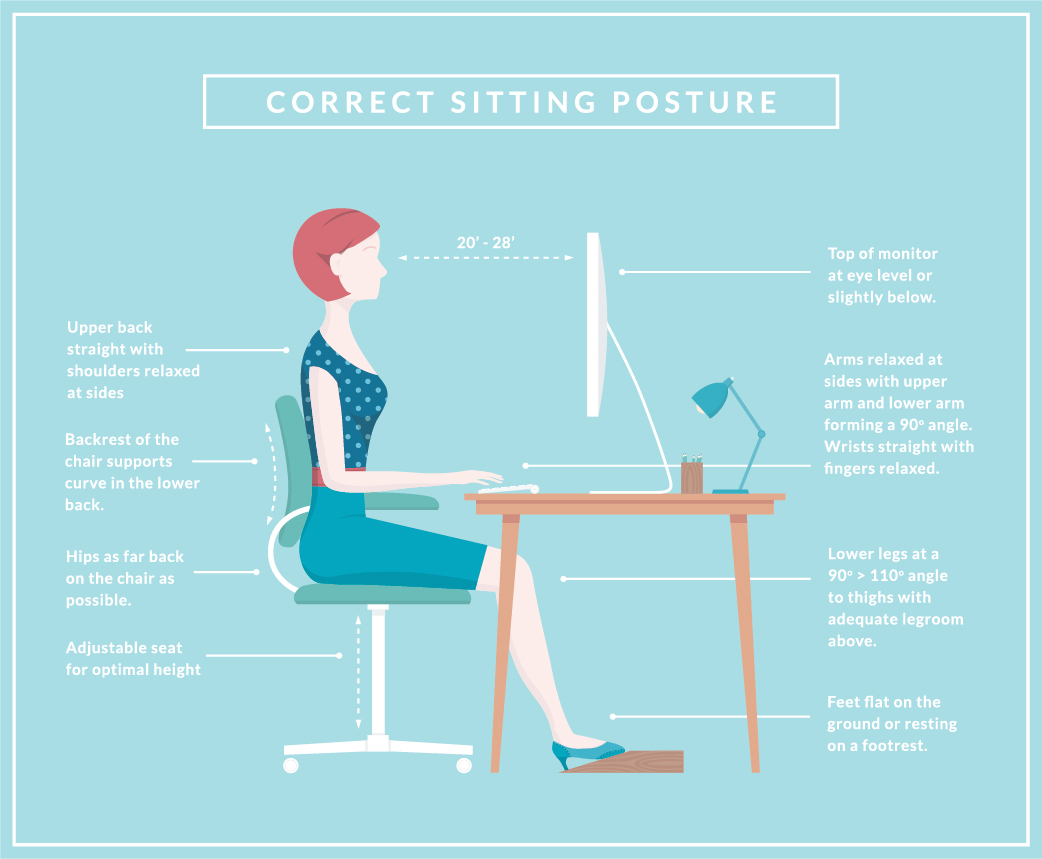
Correct sitting posture

Best practices

Adjusting to working from home can be challenging and it may take some time to find a new routine and schedule. The following tips are recommended best practices to help you work productively while also maintaining work-life balance at home.

  1. Choose a dedicated workspace: Designate a spot in your home for working. It should ideally be a space you don’t relax in.
  2. Define a beginning and finishing time: Pick a definitive start and end time each day to establish a clear work-life balance.
  3. Dress the part: Dress like you’re going to the office; it helps keep a sense of routine and keeps you focused.
  4. Have a plan: Keep a more structured daily schedule than usual to help you avoid distractions and maintain productivity.
  5. Think about how you’re communicating: Be conscious of how you’re communicating and the different communication methods you’re using.
  6. Take clear breaks: Remember to take breaks when you need to and use this time to get up, stretch and move around.

Safety tips

Accidents can happen anywhere at any time, which is why we’re sharing recommendations to help you maintain a safe environment while you’re working remotely.

  1. Consider lighting and space when setting up your workstation: Make sure you have enough lighting and space to work comfortably.
  2. Ensure walking paths and doorways are unobstructed: This will help prevent slips, trips or falls and keep paths clear in case of an emergency.
  3. Don’t place computers near heat sources: Computers and other hardware can overheat which could lead to malfunction and could even start a fire.
  4. Maintain a clean and clutter-free workspace: To minimize the spread of COVID-19, many counties and cities are implementing stay-at-home orders. While you are home and sharing space with your family members, be sure to sanitize your workstation and continue frequent handwashing. You should also keep your space free of trash and other hazards that could cause you to slip, trip or fall.
  5. Use power cord ties: Cord ties can help you keep your cords organized, preventing trip and fire hazards.
  6. Utilize surge protectors: Without a surge protector, a power surge can easily damage your computer, effecting your data or your system.
  7. Keep liquids away from electrical equipment: This includes on the ground and on your desk. You can also keep a coaster on your desk and a lid on your cup to help prevent any spills.
  8. Prevent cybersecurity risks: You can practice good computer security by utilizing a secured VPN and Wi-Fi, keeping up with company-approved computer updates and being vigilant of phishing scams.
  9. Stay hydrated and remember to give yourself a lunch break: Keep these things in mind as working remotely affects your normal office routine.
  10. Locate and utilize the following safety tools in your home:
    • Smoke alarms and carbon monoxide detectors: It’s likely that you will already have these in your home so be sure to check their batteries and test them regularly.
    • First-aid kit: Accidents can happen at any time so be sure you can quickly find first-aid essentials in your home.
    • Fire extinguisher: Familiarize yourself with the fire extinguisher in your home so that if a fire occurs you are prepared to react quickly.

11) Prevent awkward postures and eye strain by making your workstation setup more ergonomic:

  • Eliminate sources of glare behind the monitor and try not to face directly into a window.
  • Follow the 20-20-20 rule by looking at an object at least 20 feet away for 20 seconds every 20 minutes.
  • Keep your shoulders relaxed with your elbows at your side.
  • Do not overreach for your keyboard or writing tools.
  • When in seated position, your hips should be level-to-slightly-higher than your knees.
  • If your feet don’t touch the floor, use a box or footrest to prop them up.
  • Your elbows should be even or slightly lower than your keyboard.
  • If possible, use an external monitor, keyboard and mouse.
  • Take regular stretch breaks throughout the day.

Haz-Com SDS Link


Did you know you can access the company SDS's using this link?

https://chemmanagement.ehs.com/9/8a7f3a9d-1e54-4b00-85fe-dd9e9d47dec9/ebinder


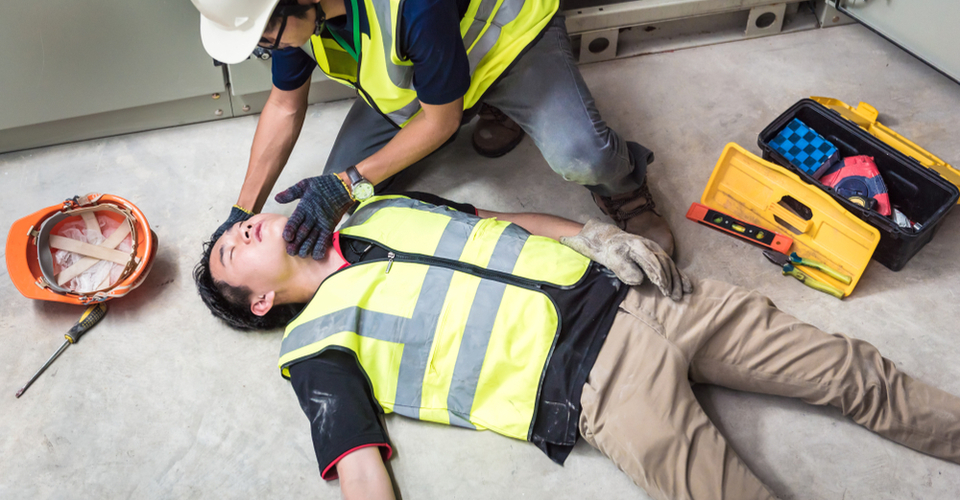
Rescue Breaths: Are they gone or not?


RESCUE BREATHS: ARE THEY GONE OR NOT?

Read more here

Rescue breaths

By guest blogger Bill Rowe, Director of Content Development

I still remember the day when the 2010 CPR and ECC guidelines were released and the primary message from the news media was that rescue breaths were eliminated from CPR. Headlines screamed, broadcasters announced with great fanfare, and sound bites ruled… rescue breaths were gone!

But it really wasn’t that simple.

First, let’s clear up the main point. For people that become trained lay providers of CPR, rescue breaths are still a critical part of their ability to perform CPR. They are still part of standardized layperson training.

Let me see if I can help clear things up.


Read more here


KEEPING CREWS SAFE WEEK AFTER WEEK


M&S Engineering

Safety

KEEPING CREWS SAFE … WEEK AFTER WEEK


Workplace Hazard Reporting

Incident reporting is critical, and near-miss reporting is important, but hazard reporting is also extremely necessary for the safety of your workforce.


All hazards that are found in the workplace should be reported immediately to a supervisor, the safety department or management. This is a standard practice that should exist in any workplace and every employee should be made aware that this is the appropriate action to take should they encounter any hazard or potential hazard they discover. However, many employees may feel (justified or not) that the hazards they encounter, sometimes on a daily basis, are just how things are and reporting them is not necessary.  Designing, setting up and communicating a Hazard Reporting Program is a good idea for any business to help avoid this potentially dangerous attitude. Implementing a Hazard Reporting Program will help ensure that your workplace is safer for your employees and reduce costly incidents or business interruptions.


All employees should be trained in hazard recognition and avoidance. Hazard Reporting is a critical part of this training so that employees know exactly what to do when they encounter a hazard they can’t immediately correct.  Don’t get overwhelmed by the word “training” because you can design the training to be as simple as you need for your specific team.  Depending on the types of hazards your employees encounter, this training could be a mandatory all-day in-person training session for high-hazard jobs., or on-the-job training led by a competent supervisor, or even a 30-minute safety meeting. For low-hazard jobs, at least consider training or email reminder so employees understand hazard reporting is not only acceptable but also expected.


During hazard reporting training, the following points should be emphasized:

·      What is an unsafe condition that should be reported? This is any circumstance found in the workplace that could allow an incident to occur that might harm people, equipment or property.  Give examples specific to your workplace such as rusted or broken tools, inadequate PPE provided, containers that are not labeled, insufficient stairway lighting, broken machine guards, or a leaking refrigerator in the break room.

·      What is an unsafe act that should be reported? This is any behavior that could lead to an incident that might harm people, equipment or property.  Unsafe acts might not be intentional.  Examples of unsafe acts might include using equipment in a careless manner or not using PPE as required.

·      What should be done if an unsafe condition or act is witnessed in the workplace?  This depends on the hazard  reporting procedure in your workplace, so be specific. Let employees know exactly what steps they should take which could be filling out a corm or verbally telling a supervisor.

·      When should a hazard be reported?  Any unsafe condition or act should be reported immediately, or at the next available safe opportunity that he employee has to do so.

·      What should employees expect after a hazard is reported?  Let employees know what the expected time frame is for corrective and preventative measures that are expected and how employees can follow-up on the corrections progress, if needed.

·      Where can employees find a copy of the Hazard Reporting Procedure?  Copies of the Hazard Reporting Procedure can be found on the MS ENGR Safety Website.  It is important that all employees are familiar with how to access company policies and procedures.


Poison Ivy


Volume 8, Issue 3

 READ THE FUL STORY HERE

Welcome to the Zanfel Zone! As always, Zanfel Laboratories is here to provide you with important information on plant identification, prevention, and treatment.

Working Around Poison Ivy and Poison Oak

Tips for reducing exposures and misery:

  1. Plant Identification. In the US, there are two species of poison ivy and two species of poison oak. The shape of the plants’ leaves can vary widely from one place to the next. Be suspicious of any climbing vine that uses aerial roots to attach to trees. (For free copies of Zanfel’s education resources on plant ID, please click on the “Want To Learn More” link)
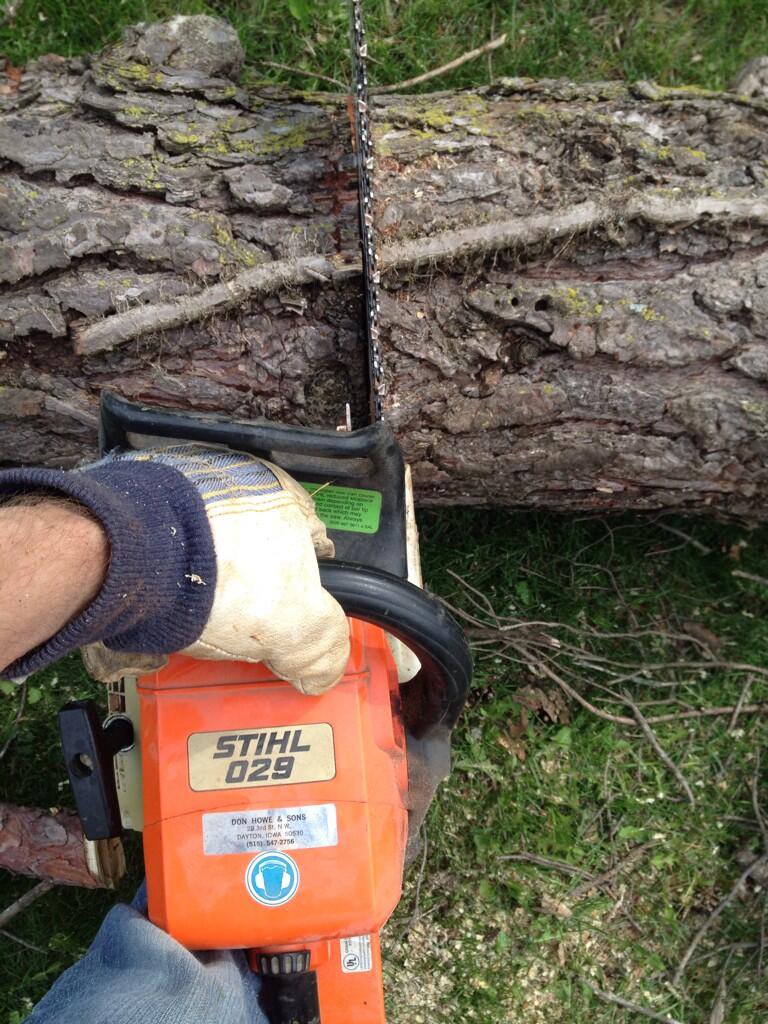
  2. Remember that all parts of the plant are toxic. The plants’ toxin, urushiol, is an oil that is found not only in the leaves, but also in the vines, aerial roots, stems, and roots. Running a chainsaw through a poison ivy stem or vine can spray your skin and clothing with urushiol, the plants’ rash inducing oil.
  3. It only takes about 60 minutes for urushiol oil to absorb into the skin. If exposure is suspected, wash the exposed skin ASAP with soap and cool water to remove as much unabsorbed urushiol as possible. If it has been more than 60 minutes, the urushiol is already in your skin and “regular” soap and water is no longer effective.

READ THE FUL STORY HERE


Protecting Workers from the Effects of Heat


Protecting Workers from the Effects of Heat

At times, workers may be required to work in hot environments for long periods. When the human body is unable to maintain a normal temperature, heat illnesses can occur and may result in death. It is also important to consider that hot work environments may exist indoors. This fact sheet provides information to employers on measures they should take to prevent worker illnesses and death caused by heat stress.

Read more here


Protecting Workers from the Effects of Heat


Protecting Workers from the Effects of Heat

At times, workers may be required to work in hot environments for long periods. When the human body is unable to maintain a normal temperature, heat illnesses can occur and may result in death. It is also important to consider that hot work environments may exist indoors. This fact sheet provides information to employers on measures they should take to prevent worker illnesses and death caused by heat stress.

Read more here


What are confined spaces


What are confined spaces?

Ventilation hoses provide air and exhaust toxic vapors during confined space entry. A guardrail would also be necessary to protect workers from potential falls.

Ventilation hoses provide air and exhaust toxic vapors during confined space entry. A guardrail would also be necessary to protect workers from potential falls.

Many workplaces contain areas that are considered "confined spaces" because while they are not necessarily designed for people, they are large enough for workers to enter and perform certain jobs. A confined space also has limited or restricted means for entry or exit and is not designed for continuous occupancy. Confined spaces include, but are not limited to, tanks, vessels, silos, storage bins, hoppers, vaults, pits, manholes, tunnels, equipment housings, ductwork, pipelines, etc.

OSHA uses the term "permit-required confined space" (permit space) to describe a confined space that has one or more of the following characteristics: contains or has the potential to contain a hazardous atmosphere; contains material that has the potential to engulf an entrant; has walls that converge inward or floors that slope downward and taper into a smaller area which could trap or asphyxiate an entrant; or contains any other recognized safety or health hazard, such as unguarded machinery, exposed live wires, or heat stress.


Read more here


Confined Spaces


Ventilation hoses provide air and exhaust toxic vapors during confined space entry. A guardrail would also be necessary to protect workers from potential falls.


Confined Spaces


"Confined space" means a space that: 


(1) Is large enough and so configured that an employee can bodily enter and perform assigned work; and 


(2) Has limited or restricted means for entry or exit (for example, tanks, vessels, silos, storage bins, hoppers, vaults, and pits are spaces that may have limited means of entry.); and 


(3) Is not designed for continuous employee occupancy.


Read more here: https://www.osha.gov/pls/oshaweb/owadisp.show_document?p_table=standards&p_id=9797

Electrical Safety


M&S COMPANIES
Opening of Residential and Commercial Electrical Panel Doors
Standard Operating Procedure (SOP)

Scope: Inspection/ Observation (Only) of Residential and Commercial Electrical panel doors.


PPE: Safety Glasses (smoke tented) ANSI 2- 87


Procedure:

•   No Rings or Jewelry are to be worn while opening of (Electrical Panel Doors)
• Utilize the three S's (Sight, Sound and Smell) Note: If you see, hear or smell any unsafe
conditions, back away and report any unsafe conditions.
• Use a Capacitive test device to check that electrical panel door is not energized. Note: As a
minimum. Note: if a Capacitive testing device is not accessible use the back of your hand to check
if electrical panel door is energized. Note: if electrical panel door shows
to be energized.

"Back away call for assistance! Report any unsafe conditions"

• Always stand to one side of electrical panel door while opening. Check to see if electrical panel
has a dead front plate. Note: The "dead front plate" is designed for safety in the event of an Arc
Flash. Note: if dead front plate is missing, back away and report the hazard.
M&S Companies: Always promotes "SAFETY" first and foremost and complies with all OSHA, NFPA and
NESC standards.

Standar Operating Procedure (S


M&S COMPANIES


Opening of Residential and Commercial Electrical Panel Doors


Standard Operating Procedure


(SOP)


Scope: Inspection/ Observation (Only) of Residential and Commercial Electrical panel doors.


PPE: Safety Glasses (smoke tented) ANSI Z- 87


Procedure:


  • No Rings or Jewelry are to be worn while opening of (Electrical Panel Doors)

  • Utilize the three S’s (Sight, Sound and Smell) Note: If you see, hear or smell any unsafe conditions, back away and report any unsafe conditions.

  • Use a Capacitive test device to check that electrical panel door is not energized. Note: As a minimum. Note:  if a Capacitive testing device is not accessible use the back of your hand to check if electrical panel door is energized. Note: if electrical panel door shows to be energized.


                 “Back away call for assistance! Report any unsafe conditions”


  • Always stand to one side of electrical panel door while opening. Check to see if electrical panel has a dead front plate. Note: The “dead front plate” is designed for safety in the event of an Arc Flash. Note: if dead front plate is missing, back away and report the hazard.


M&S Companies: Always promotes “SAFETY” first and foremost and complies with all OSHA, NFPA and NESC standards.


Automated External Defibrillat


Of all the places you might find a public-access automated external defibrillator (AED), perhaps nowhere is it more critical than at a gym. A new study shows that having an AED available at fitness centers makes a significant impact on survival rates.


According to an article from the Sudden Cardiac Arrest Foundation, a study published in the European Heart Journal that looked at data collected over an 18-year period in 252 sports centers in Italy showed that:


"Onsite AED use significantly reduced the time to first shock from 7.3 to 3.3 minutes...Neurologically intact survival was 93% for patients treated with an onsite AED compared to 9% without an AED."


This reduction in response time is crucial for patient survival in a sudden cardiac arrest (SCA) incident. Successful defibrillation is highly dependent on how quickly defibrillation occurs. For each minute in cardiac arrest, the chance of survival goes down by about 10%. After as few as 1O minutes, survival is unlikely

The Importance of Staying Hydr


The Importance of Staying Hydrated at Work and in Life

At your job, you are always looking for ways to perform better and more efficiently while you work. But did you know there are some people who may not be performing at their best because they are mildly dehydrated? For these people to avoid dehydration it can be as simple as knowing their proper hydration level and paying attention to their thirst.

The scientific evidence between cognitive performance and dehydration, although limited, is strong, and continues to grow. A recent survey conducted by GfK Roper on behalf of The Coca-Cola Company, indicated that employed Americans are informed about the merits of staying hydrated, yet many are not putting this knowledge into practice.

About three in four, or 73 percent of those surveyed, said that drinking sufficient fluids throughout the day to maintain proper hydration is essential to being able to concentrate during the day — as many as who said getting a good night’s sleep is essential. Yet surprisingly, 31 percent of those surveyed, especially those who work outdoors, also admitted to deliberately drinking less than they would like while at work to avoid having to take bathroom breaks, therefore overriding thirst signals.

“In a world where many people are consistently trying to juggle a hectic work schedule, people may sometimes override thirst signals and, thus, become mildly dehydrated, which can affect a person’s ability to perform at his or her best,” says Maxime Buyckx, M.D, director of nutrition and health sciences for The Coca-Cola Beverage Institute for Health and Wellness.

Dr. Buyckx notes that such common things as feeling fatigued, lack of focus or concentration, headaches, sleepiness and infrequent bathroom breaks could be signs of mild dehydration, but may be overlooked or attributed to other daily factors in a person’s life. It is unknown what percentage of people in the workplace in fact become dehydrated to this extent, but people who have a pronounced feeling of thirst are likely to be mildly dehydrated. “It’s easy to ignore these signs or attribute them to a busy working environment or personal life. But if people paid just a little bit more attention to these signals their bodies are giving them and made sure to maintain proper hydration, it may help them to be at their best during the day.”

“Your body is constantly losing water through simple acts such as breathing, perspiration and going to the bathroom,” adds Dr. Buyckx. “More is lost through daily activities, especially strenuous exercise or working in high temperatures. So it’s important that it be replaced.”

Many types of liquids help keep the body hydrated. The myth that caffeine causes dehydration is just that, a myth. According to the Institute of Medicine of the National Academy of Sciences, all beverages, including those with caffeine, contribute to hydration needs. One example is the popular soda Diet Coke, which is made of 99 percent water.

By visiting www.MakeEveryDropCount.com, you can learn more about hydration and tips that will help you stay healthy. Consider these ideas:

* Determine your daily hydration needs. Consider factors like age, gender, weight, environmental conditions and activities. On the site there is a Hydration Calculator to help you determine how much you need to drink each day to feel and perform at your best.

* Choose beverages that you enjoy. Several studies show that adults consume about 45 to 50 percent more liquid when it’s flavored. Be sure to incorporate no- and low-calorie options to control calorie intake.

* Eat more fruits and vegetables. They tend to have a high water content, which makes them a great option for helping to meet individual hydration needs.

* Don’t exclusively rely on thirst. By the time you are thirsty, chances are mild dehydration has already set in. Hydrate throughout the day. Try keeping a water bottle or beverage in your vehicle, at your desk, in a cooler or wherever you will be reminded to drink. Take regularly scheduled beverage breaks; ideally at least one break per hour.

* If your job involves traveling, pay special attention to fluid intake on the airplane. High altitudes tend to have low humidity, which increases water loss through the skin and decreases the sensation of thirst.

Proper hydration can help you be at your best throughout the day. Make sure to select the right beverages for your dietary needs and lifestyle.

This entry was posted June 27th 2017 by Ken Means M&S Engineering Safety Manager.

TOOL SAFETY


TOOL SAFETY

- Inspect Tools for any damage before use.
- Never use rusted, cracked, or warped tools.
- Remember to use the right personal protective equipment (PPE) such as gloves, safety glasses, goggles, or face-shields.

Screw drivers are not chisels!
Channellocks are not fuse pullers!
& Wrenches are not hammers!


Electrical Danger and Warning


Electrical Safety

-Pay attention to Electrical Danger and Warning Signs
-Use properly insulated tools if working with electricity
-Wear the right type of gloves or other personal protective equipment when working with or near electricity
-Notify managers of electrical hazards
-Dont work on electrical equipment unless you have been trained, are qualified, and equipped!!

M&S Safety


We are now conducting Basic Plus First Aid, CPR and AED training in house at M&S Engineering. Please contact M&S safety department to schedule your class.


Have a Safe week!

Ken Means

Personal Protective Equipment


What is Personal Protective Equipment (PPE)


Personal protective equipment, commonly referred to as "PPE", is equipment worn to minimize exposure to serious workplace injuries and illnesses. These injuries and illnesses may result from contact with chemical, radiological, physical, electrical, mechanical, or other workplace hazards. Personal protective equipment may include items such as gloves, safety glasses and shoes, earplugs or muffs, hard hats, respirators, or coveralls, vests and full body suits.

What can be done to ensure proper use of personal protective equipment?

All personal protective equipment should be safely designed and constructed, and should be maintained in a clean and reliable fashion. It should fit comfortably, encouraging worker use. If the personal protective equipment does not fit properly, it can make the difference between being safely covered or dangerously exposed. When engineering, work practice, and administrative controls are not feasible or do not provide sufficient protection, employers must provide personal protective equipment to their workers and ensure its proper use. Employers are also required to train each worker required to use personal protective equipment to know:

  • When it is necessary
  • What kind is necessary
  • How to properly put it on, adjust, wear and take it off
  • The limitations of the equipment
  • Proper care, maintenance, useful life, and disposal of the equipment

If PPE is to be used, a PPE program should be implemented. This program should address the hazards present; the selection, maintenance, and use of PPE; the training of employees; and monitoring of the program to ensure its ongoing effectiveness.


Head Protection


Hazard: Serious head injuries can result from blows to the head.

Solution: Be sure that workers wear hard hats where there is a potential for objects falling from above, bumps to their heads from fixed objects, or accidental head contact with electrical hazards.


© M&S Engineering 2016 All rights Reserved

Created by S-Co Designs